
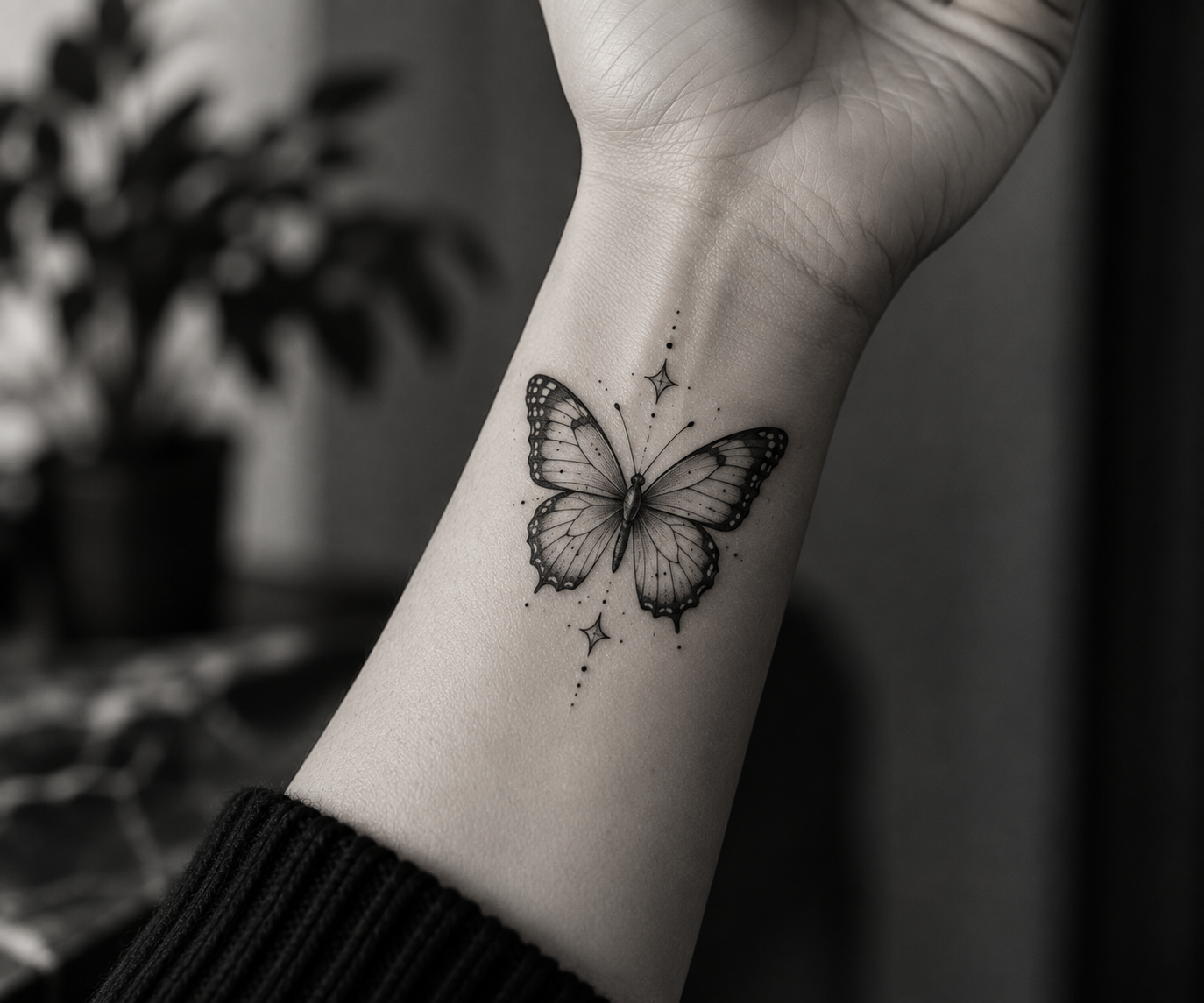
A butterfly looks light and delicate. On skin, though, it can carry a much bigger story.
For some people, a butterfly tattoo marks a change they have lived through. For others, it represents freedom, growth, a new beginning, a memory, or simply an appreciation for nature. The appeal is also visual: the butterfly has a shape that can work as a tiny wrist tattoo just as easily as it can become the centerpiece of a large back piece.
If you are still deciding what yours should look like, this guide is meant to help. We will look at the meaning behind butterfly tattoos, more than 50 design ideas, the styles that change their character, placement, size, combinations, artist selection, aging, and aftercare.
Table of Contents
1. What Does a Butterfly Tattoo Mean?
The butterfly is one of those tattoo subjects where the image and the story naturally meet. Its life begins in a completely different form before it goes through metamorphosis and emerges as an adult butterfly. The Smithsonian explains this natural process through the stages of egg, larva, pupa, and adult.
That transformation is a big reason the butterfly has become associated with personal change. Someone might choose one after leaving an old chapter behind, starting over in a new place, gaining confidence, or simply realizing that they have become a different person.
Still, there is no rule saying a butterfly has to represent transformation. Tattoo meaning is personal. The same design can mean freedom to one person and remembrance to another.
- Transformation: a visible reminder of a major change in life.
- Growth: becoming more confident, mature, or comfortable with yourself.
- Freedom: open wings can suggest independence and movement.
- New beginnings: a symbol for starting a different chapter.
- Beauty and nature: a simple celebration of the natural world.
- Memory: a butterfly can be combined with dates, flowers, names, or other personal details in a memorial design.
If you want to understand the natural story behind the symbol, read the Smithsonian’s guide to butterflies and their life cycle.
2. 50+ Butterfly Tattoo Ideas
Finding a tattoo idea does not have to start with one perfect picture. In fact, it is often easier to decide when you first choose a direction. Think about the mood, the amount of detail, and the part of the body where you want the butterfly to live.
- Small and minimalist: tiny single-line butterfly, small black silhouette, butterfly behind the ear, delicate wrist butterfly, ankle butterfly, finger butterfly, collarbone butterfly, two tiny butterflies, three butterflies in flight, butterfly with a small star, butterfly with a single dot, micro butterfly with initials.
- Realistic: realistic monarch, swallowtail butterfly, blue morpho-inspired design, detailed wing veins, open-wing butterfly, three-quarter butterfly, natural shading, butterfly resting on a flower, butterfly with leaves, two butterflies facing each other, realistic butterfly with a soft shadow, large butterfly across the shoulder.
- Blackwork and black & grey: solid black butterfly, blackwork with negative space, bold symmetrical butterfly, ornamental black butterfly, dotwork butterfly, geometric black butterfly, high-contrast wings, black butterfly with a rose, butterfly as part of a sleeve, dark ornamental butterfly.
- Flowers and nature: butterfly with wildflowers, butterfly with roses, butterfly with lavender, butterfly with cherry blossoms, butterfly with lilies, butterfly surrounded by vines, butterfly resting on a flower, butterfly with leaves, butterfly with a crescent moon, butterfly with stars, butterfly emerging from flowers, butterfly with a birth flower.
- Personal and symbolic: butterfly with an important date, butterfly with initials, memorial butterfly, butterfly with a meaningful word, butterfly representing a new beginning, butterfly with a birth flower, two butterflies representing two people, butterfly trail representing a journey, butterfly with moon and stars, butterfly with a heart, butterfly with a sun symbol, butterfly built around a meaningful date.
- More unusual directions: half butterfly and half flower, geometric butterfly, lace-inspired butterfly, moth-inspired butterfly, broken-wing butterfly, butterfly made from fine dots, negative-space wings, butterflies moving up the spine, butterfly pair across the shoulders, butterfly incorporated into a larger sleeve.
These ideas are better used as starting points than as designs to copy. Save a few references that share the same feeling, then show them to your artist and explain what you like about them.
3. Choosing the Style, Size & Placement
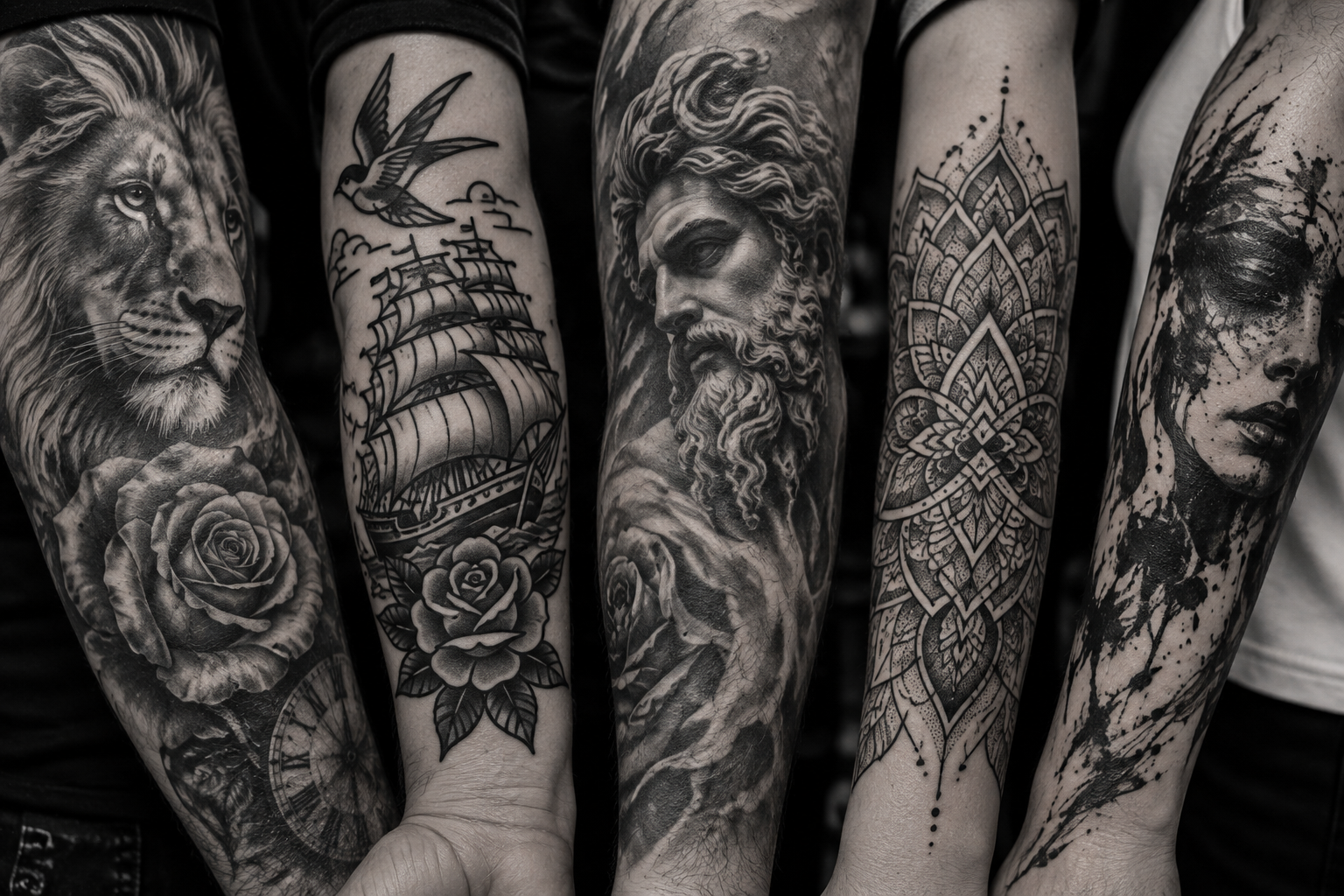
The same butterfly can look almost like a different tattoo depending on how it is drawn. Fine-line and minimalist designs suit smaller placements and restrained detail. Realistic butterflies need more room for proportions, wing patterns, texture, shading, and depth. Blackwork and black-and-grey designs rely on contrast, while colorful, geometric, and ornamental approaches change the mood in different ways.
Then comes size. A tiny butterfly should usually have a clean silhouette and limited detail. Medium designs give you room for shading and another element such as a flower. Large butterflies can support realistic texture, botanical details, strong contrast, and ornamental framing.
Placement should follow the body rather than fight it. The wrist and ankle suit compact designs. The forearm gives you more room for a single butterfly or a small composition. The shoulder and upper back can carry larger symmetrical designs. The collarbone can work beautifully with a delicate shape that follows the natural line of the body, while the chest and spine give you more room for larger compositions.
There is also a practical side to placement. Areas that experience frequent rubbing from shoes, clothing, or equipment deserve extra thought. Your artist can tell you how the exact location may affect the design and healing process.
4. Choosing a Tattoo Artist
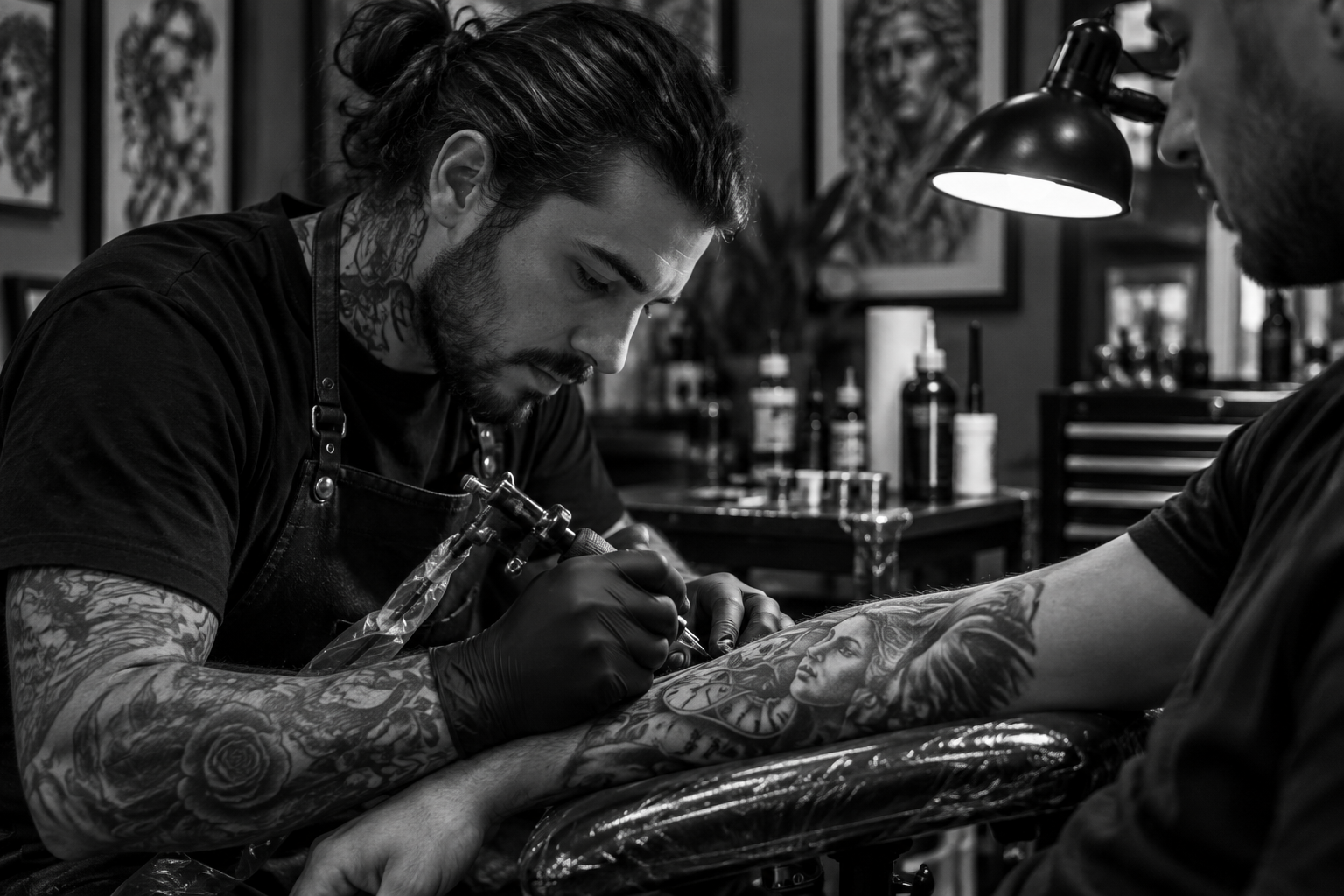
A great reference photo does not guarantee a great tattoo. The artist is the person who has to turn that idea into real ink on your particular skin.
- Check the portfolio. Look for repeated examples of the style you want.
- Look for healed work. Healed examples give you a better idea of how lines, shading, and color settle.
- Bring inspiration, not a blueprint. Explain what you like about your references rather than asking for an exact copy.
- Discuss the size early. If you want a detailed butterfly that is also very small, ask what can realistically fit.
- Pay attention to the consultation. You should be able to ask questions and understand the artist’s recommendations.
The goal is not to find someone who can reproduce a picture perfectly. It is to find someone who can take the part you love and turn it into a design that fits your body.
5. Aging & Aftercare
Every tattoo changes with time. Lines can soften, very small details can become less distinct, and sunlight can affect the appearance of ink. Good spacing, an appropriate size, clear line work, sensible placement, and an experienced artist all help.
Sun protection matters as well. The American Academy of Dermatology’s tattoo skin-care guidance recommends protecting tattooed skin from ultraviolet exposure and using broad-spectrum SPF 30 or higher when appropriate.
For a fresh tattoo, follow the instructions given by your tattoo artist. Cleaning, moisturizing, coverings, and activity restrictions can vary depending on the tattoo and technique. Avoid unnecessary rubbing or picking while the skin heals.
6. Butterfly Tattoo FAQ
Click a question to reveal the answer.
What is the most common butterfly tattoo meaning?
Are butterfly tattoos only for women?
What is the best placement for a small butterfly tattoo?
Do butterfly tattoos age well?
Can a butterfly tattoo be completely black?
How much detail should a small butterfly tattoo have?
Can I combine a butterfly with a flower?
Should I copy a butterfly tattoo I found online?
7. Final Thoughts
A butterfly tattoo does not need to be complicated to feel meaningful. Sometimes the strongest design is simply a clean butterfly placed in the right spot. Other times, the wings become part of a larger composition filled with flowers, symbols, shading, or personal details.
Start with the feeling you want. Then think about style, size, and placement. Look at your artist’s healed work, be realistic about how much detail can fit, and give yourself enough time to make the final decision.
For more focused inspiration, explore the Inkelys Butterfly Tattoos collection as we build out more guides covering individual styles, meanings, ideas, and placements.
Inkelys note: Tattoo inspiration should help you make a better decision, not pressure you into one. Use references as a starting point, talk with a professional tattoo artist, and make the final design your own.
1 thought on “Butterfly Tattoos: 50+ Ideas, Meanings, Styles & Placement Guide”